
Deciding which character will tell a story might be the most important part of any piece of fiction. The authors whose viewpoint characters I love the most are the same ones whose books I race to read the first week they’re for sale. (Louise Penny, Sara Paretsky, John Sandford, to name a few.)
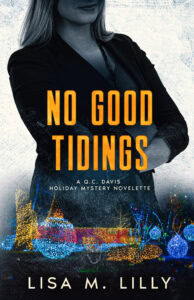
Sometimes as a writer I think the choice is obvious, then discover it’s not. For instance, when I wrote the first draft of No Good Tidings, my Q.C. Davis holiday mystery novelette, I wrote it from the point of view of the series main character, Quille C. Davis.
And why wouldn’t I? It’s her series.
But halfway through something felt off. The plot had enough twists. I found the suspects intriguing. I loved the holiday vibe–lots of snow, holiday twinkle lights, wreaths and pine trees, candles. And the setting intrigued me. A restaurant called Community Tables where patrons move to other tables with each course and get to know the other diners.
And yet it felt off — until it hit me. The wrong person was telling the story. How did I know?
 When writing a story from a single character’s point of view (like the Quille books), I look at three things:
(1) Which character is there for all the key events the reader needs to see or can learn about them in a way that doesn’t feel strained? For example, sometimes Quille checks out social media posts or reads emails that come from another character. These things fill in blanks in what she personally knows.
(2) Whose voice will readers want to hear for the entire narrative? In shorter story there’s more leeway. For example, someone who tells joke after joke, pun after pun, could be fun for a story you can read in ten minutes. But the same narrator might drive a reader crazy by page 20 in a novel.
(3) What’s at stake? Stakes can include physical danger, emotional turmoil, or money issues.
Being an investigator as well as an attorney, it’s pretty easy to be sure Quille takes part in or learns of every event (or clue). And I’m at eight novels and counting so people like hearing her voice. But when I paused in my first draft and thought about the stakes, it hit me that Quille was wrong for No Good Tidings.
The holiday mystery follows her and her best friend Lauren as they try to sort out some fraud at the restaurant. But things take a violent turn. This puts both Quille and Lauren in danger. Quille wants to sort out what’s happening and protect everyone there. So does Lauren.
But only Lauren has her emotions on the line.
After the events in The Desperate Man (no worries, there’ll be no spoilers here if you haven’t yet read it), Lauren is not quite feeling like herself. Normally fearless, now she’s hesitant. Her upbeat, bubbly personality is a bit subdued. She’s out in the world again but not feeling great.
Who better to tell a story where she is once again facing physical danger? Lauren not only wants to help Quille solve the crime, she wants to regain her confidence and joy in life. To feel like herself.
That means there’s a lot more at stake for her than for Quille. Plus that need for renewal and joy fits with the holiday season theme of book.
Once I saw that, I switched points-of-view and had a great time writing in Lauren’s voice. I hope you’ll enjoy hearing from her, too.
Learn more about No Good Tidings by clicking here.